Andy Clark on Prediction, Action, and the Embodied Mind (BSP 126)
/
BSP 126 is an interview with Andy Clark about his latest book Surfing Uncertainty: Prediction, Action, and the Embodied Mind.
Read MoreA Podcast that Explores how neuroscience is unraveling the mystery of how our brain makes us human
Brain Science is a monthly podcast Brain Science, hosted by Ginger Campbell, MD. We explore how recent discoveries in neuroscience are helping unravel the mystery of how our brain makes us human. The content is accessible to people of all backgrounds.
BSP 126 is an interview with Andy Clark about his latest book Surfing Uncertainty: Prediction, Action, and the Embodied Mind.
Read MoreBSP 125 is our ninth annual review episode. We review some key ideas from each of the 10 episodes that were released in 2015, and then take a look ahead to 2016. Check out the show notes for a complete lists of this year's guests and the books we covered. The transcript for this episode is FREE.
Read MoreBSP 124 is an interview with Dr. Michael Anderson, author of After Phrenology: Neural Reuse and the Interactive Brain. We also continue our ongoing discussion of Embodied Cognitive Science.
Read MoreBSP 123 is an interview with philosopher Anthony Chemero, author of Radical Embodied Cognitive Science and Phenomenology: An Introduction with Stephan Käufer. The focus of this interview is understanding how phenomenology has influenced psychology and cognitive science.
Read MoreBSP 117 is an interview with pioneering neuroscientist Dr. Michael Gazzaniga about his new autobiography Tales from Both Sides of the Brain: A Life in Neuroscience.
Read More
Luiz Pessoa of the University of Maryland
In The Cognitive-Emotional Brain: From Interactions to Integration neuroscientist Luiz Pessoa argues that emotion and cognition are deeply intertwined throughout many levels of the brain. In a recent interview (BSP 106) Pessoa and I focused on recent discoveries about the amygdala and Thalamus that challenge traditional assumptions about what these structures do. The amygdala processes more than fear (and other negative stimuli) and the Thalamus is more than a mere relay station.
This a fairly technical discussion but Pessoa did a good job of making the material accessible to all listeners. The reason I think these concepts matter is that not only do they challenge overly simplistic notions of how the brain works, but they also challenge our tendency to see emotion and cognition as separate and often opposing processes.
Premium Subscribers now have unlimited access to all old episodes and transcripts.
New episodes of the Brain Science Podcast are always FREE. The 50 most recent episodes are also free. Just subscribe in your favorite podcasting app.



The Cognitive-Emotional Brain: From Interactions to Integration by Luiz Pessoa
Pessoa L, Adolphs R. (2010) "Emotion processing and the amygdala: from a 'low road' to 'many roads' of evaluating biological significance.” Nature Reviews Neuroscience, 11(11):773-83. doi: 10.1038/nrn2920.
Networks of the Brain by Olaf Sporns
In Search of Memory: The Emergence of a New Science of Mind by Eric R. Kandel (BSP 3)
Beyond Boundaries: The New Neuroscience of Connecting Brains with Machines---and How It Will Change Our Lives by Miguel Nicolelis (BSP 79)
Visit Dr. Pessoa's lab at emotioncognition.org to learn more.
BSP 11: Emotion
BSP 32: a brief introduction to Neuroanatomy
BSP 65 and BSP 91 are interviews with Jaak Panksepp about the subcortical origins of emotion
I spoke with Olaf Sporns about the Human Connectome and the use of Network Theory in BSP 74 and BSP 103.
BSP 90: a discussion of Self Comes to Mind: Constructing the Conscious Brain by Antonio Damasio.
Please check out my other podcast Books and Ideas. I will be posting a new episode by the end of February.
Visit the Brain Science Podcast Group on Goodreads to learn what books are coming and to post comments about this or any other episode.
If you have signed up for our new Premium Subscription you can get your Premium content via your web browser or via the BSP Mobile app. Unfortunately other podcasting apps like Downcast and Stitcher can not play premium content, but they will continue to get New episodes. Click here for short cut to Premium Login.
Sign up for our Free Newsletter to get show notes like these automatically every month.

Robert Burton, MD
In On Being Certain: Believing You Are Right Even When You're Not, Robert Burton showed that the feeling of certainty, which is something we all experience, has its origin in brain processes that are both unconscious and inaccessible to consciousness . Now in his new book, A Skeptic's Guide to the Mind: What Neuroscience Can and Cannot Tell Us About Ourselves, he extends these ideas to other mental sensations such as our feeling of agency and our sense of causation. The idea that much of what our brain does is not accessible to our conscious awareness is NOT new, but Dr. Burton considers the implications for our understanding of the MIND.
When we talked recently (BSP 96), Dr. Burton explained that his new book has two main parts. In the early chapters, he extends the principles he developed in On Being Certain to other mental sensations. We tend to take things like our feeling of certainty, agency, and causation for granted, but he points out that these are generated in parts of the brain that we can neither access or control. What makes A Skeptic's Guide to the Mind stand out is that Burton then explores the implications of this reality. He argues that while we can become ever more knowledgeable about how our brain works, the MIND, which is something that we each experience subjectively, is much more elusive.
The fact that we are trying to study the MIND with the MIND has inherent limitations and I think that Dr. Burton is right when he says our response should be HUMILITY.
Premium Subscribers now have unlimited access to all old episodes and transcripts.
New episodes of the Brain Science Podcast are always FREE. All episodes posted after January 1, 2013, are free. See the individual show notes for links the audio files.

A Skeptic's Guide to the Mind: What Neuroscience Can and Cannot Tell Us About Ourselves, by Robert Burton
On Being Certain: Believing You Are Right Even When You're Not, (2008) by Robert Burton
Are You Sure? The Unconscious Origins of Certainty, by Ginger Campbell
An Enquiry Concerning Human Understanding, by David Hume (1748)
See the episode transcript for additional links and references.
BSP 42: A discussion of On Being Certain
BSP 43: Interview with Robert Burton about On Being Certain
BSP 67: Interview with Thomas Metzinger, author of The Ego Tunnel
BSP 85: Interview with Sebastian Seung, author of Connectome.
Send me feedback at brainsciencepodcast@gmail.com.

The Brain Science Podcast recently passed 4 million downloads and it remains entrenched at or near the top of the iTunes rankings for Science and Medicine. So now it's time for our 6th Annual Review Episode. The purpose of this year-ending podcast is to review some of the year's highlights and key ideas. As I reviewed the transcripts of this year's episodes, I was struck by the fact that although each episode stands alone, they also inform one another. One unifying theme was the importance of taking an evolutionary approach to understanding how the human brain generates complex features like mind and consciousness.
FREE: audio mp3 (click to stream, right click to download)
Premium Subscribers now have unlimited access to all old episodes and transcripts.
New episodes of the Brain Science Podcast are always FREE. All episodes posted after January 1, 2013, are free. See the individual show notes for links the audio files.
Interviews have become an outstanding feature of the Brain Science Podcast. This year I interviewed 10 scientist, including five who have appeared in past podcasts.
Patricia Churchland, PhD (Professor Emeritus, University of California-San Diego)#*
William Uttal, PhD (Professor Emeritus, University of Michigan)*
Christof Koch, PhD (Chief Science Officer, Allen Institute for Brain Research)#*
Sebastian Seung, PhD (Masschusetts Institute of Technology)*
Rachel Herz, PhD (Brown University)#*
Pamela Greenwood, PhD (George Mason University)*
Terrence Deacon, PhD (University of California-Berkeley)*
Bruce Hood, PhD (University of Bristol, UK)#*
Evan Thompson, PhD (University of Toronto, Canada)*
Jaak Panksepp, PhD (Washington State University)#*
#Indicates returning guest. See Guest List for previous episode.
*See the Bibliography page for books featured on the Brain Science Podcast.
In addition to discussing the books by these guests, I also reviewed Who's in Charge?: Free Will and the Science of the Brain, by Michael S. Gazzaniga, and Self Comes to Mind: Constructing the Conscious Brain, by Antonio Damasio.
BSP 32: Brief Introduction to brain anatomy.
BSP 47: Basics of brain evolution.
BSP 57: Chris Frith, author of Making up the Mind: How the Brain Creates Our Mental World.
BSP 67: Thomas Metzinger, author of The Ego Tunnel: The Science of the Mind and the Myth of the Self.
I am closing down the website SCIENCEPODCASTERS.ORG, which I founded back in2008. If you are looking for more high quality science podcasts I suggest the NSF-funded Science 360 Radio.
Donations via PayPal, check, or wire transfers: click here to learn how.
Buy the BSP app for your iOS or Android mobile device: a great way to get ALL the episodes and transcripts.
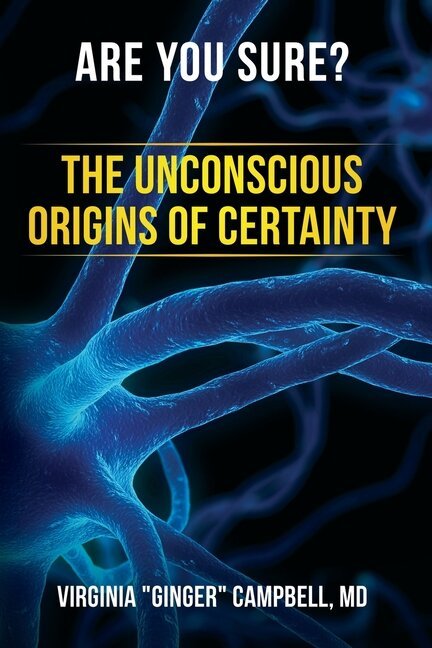
Buy my eBook: Are You Sure? The Unconscious Origins of Certainty from Amazon or get the PDF version HERE.
Buy T-shirts and other Brain gear here.
Share the show with everyone you know!
Join the brain Fan Page on Facebook, Google+, and share your thoughts in our Discussion Forum on Goodreads. Of course you can also send me email at brainsciencepodcast@gmail.com.
To get show notes automatically and never miss an episode of the Brain Science Podcast sign up for the BSP newsletter.

Evan Thompson, PhD
Embodied Cognition is a movement within cognitive science that argues that the mind is inseparable from the fact that the brain is embedded in a physical body. This means that everything that the brain does, from the simplest perception to complex decision-making, relies on the interaction of the body with its environment. Evan Thompson's book, Mind in Life: Biology, Phenomenology, and the Sciences of Mind, is an in-depth look at what he calls the "enactive" approach to embodied cognition. The enactive approach was pioneered by Thompson's mentor Francisco Varela, and it emphasizes the importance of the body's active engagement with its environment.
In a recent interview (BSP 89) I talked with Thompson about some of the key ideas in Mind in Life. Unlike most episodes of the Brain Science Podcast, this is not really a stand-alone episode. It is part of my ongoing exploration of both embodied cognition and the controversial topic of emergence. It is also intended as a follow-up to my recent interview with Terrence Deacon.
Premium Subscribers now have unlimited access to all old episodes and transcripts.
New episodes of the Brain Science Podcast are always FREE. All episodes posted after January 1, 2013, are free. See the individual show notes for links the audio files.


Mind in Life: Biology, Phenomenology, and the Sciences of Mind, by Evan Thompson (2007).
The Embodied Mind: Cognitive Science and Human Experience, by Francisco J. Varela, Evan T. Thompson, & Eleanor Rosch (1991).
Embodied Cognition, by Lawrence Shapiro (2010).
Incomplete Nature: How Mind Emerged from Matter, by Terrence W. Deacon (2011).
Dynamic Patterns: The Self-Organization of Brain and Behavior, by J. A. Scott Kelso (1995).
Friston, K.J. (1995) "Transients, Metastability, and Neuronal Dynamics."Neuroimage 5 (164-171).
BSP 5: A bried introduction to philosphy of mind
BSP 25: Embodied Intelligence with Rolf Pfeifer
BSP 36: Art Glenberg on Embodied Cognition
BSP 53: Discussion of Did My Neurons Make Me Do It? (emergence and free will)
BSP 62: Warren Brown, co-author of Did My Neurons Make Me Do It?
BSP 73: Lawrence Shapiro, author of Embodied Cognition.
Books and Ideas #47: Terrence Deacon, author of Incomplete Nature.
Continuing education credit is now available for selected episodes of the Brain Science Podcast. Click here to learn more.
I will be in Philadelphia, PA October 16-21 to attend the annual meeting of the American Academy of Family Physicians. Please contact me if you would like to get together.
My eBook Are You Sure? The Unconscious Origins of Certainty is on sale for only $2.99. Please post your review.
Next month's Brain Science Podcast will be a discussion of Self Comes to Mind: Constructing the Conscious Brain by Antonio Damasio. Self Comes to Mind is also available from our sponsor Audible.com.
Please visit the Brain Science Podcast on Facebook or Google+, or join the BSP Discussion Forum at Goodreads.com.
Never miss an episode of the Brain Science Podcast! Sign up for the Newsletter.
Send me (Dr. Campbell) email at brainsciencepodcast@gmail.com or follow me on Twitter (@docartemis).
William Uttal, PhD
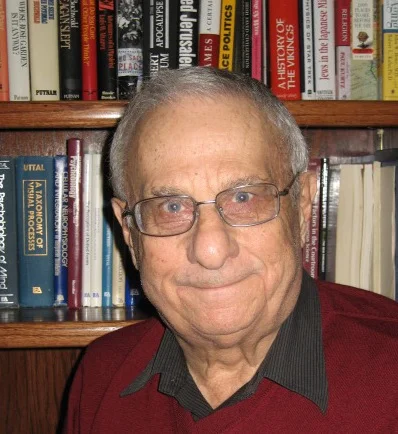
There is nothing more exciting than the mind/brain problem" according to Dr. William Uttal, author of Mind and Brain: A Critical Appraisal of Cognitive Neuroscience. In the latest episode of the Brain Science Podcast (BSP 83) I talked with Dr. Uttal about why he feels that brain imaging can not solve this mystery.
First, there is the problem that brain imaging represents the wrong level of analysis because every spot you see on a brain scan actaully represents thousands of neurons. This means that the activity and interaction between individual neurons has been lost. Then there is the problem of reproducibility, with divergent results between studies.
The evidence is accumulating that "much of the brain responds to any stimulus, and every area of the brain participates in multiple functions." This means that asking where a given function occurs may be the wrong question.
BSP 83 represents an on-going discussion of these issues, so I have included links to related episodes in the show notes.
Related Podcasts:
Send me feedback at gincampbell at mac dot.com.

In his latest book, Who's in Charge?: Free Will and the Science of the Brain, respected neuroscientist, Michael S. Gazzaniga, explores how the discoveries of neuroscience impact how we see ourselves as human beings. After providing a brief review of 20th century neuroscience, and even some of the work from the past decade, Dr. Gazzaniga concludes that nothing neuroscience has discovered changes the fact that "we are personally responsible agents and are to be held accountable for our actions."
Gazzaniga's position contrasts with those who think that recent discoveries show that the brain creates the mind in solely "upwardly causal" way, and who argue that since much of what our brain does is outside our conscious awareness or control, we should not be held responsible for our actions. Who's in Charge?: Free Will and the Science of the Brain presents what I think is a convincing argument against this common position.
In the latest episode of the Brain Science Podcast (BSP 82) I present a detailed discussion of Dr. Gazzaniga's book.
Premium Subscribers now have unlimited access to all old episodes and transcripts.
New episodes of the Brain Science Podcast are always FREE. All episodes posted after January 1, 2013, are free. See the individual show notes for links the audio files.
Who's in Charge?: Free Will and the Science of the Brain, by Michael S. Gazzaniga.
The Ethical Brain: The Science of Our Moral Dilemmas, by Michael S. Gazzaniga.
A Different Universe: Reinventing Physics from the Bottom Down, by Robert B. Laughlin (2006).
Incomplete Nature: How Mind Emerged from Matter, by Terrence W. Deacon.
Anderson, P. W., (1972). "More is different." Science, 177(20470, 393-396.
See the free episode transcript for additional references.
Links to episodes of the Brain Science Podcast that are mentioned in BSP 82.
BSP 81: Interview with Patricia Churchland about the brain and morality.
BSP 53: Discussion of Did My Neurons Make Me Do It?: Philosophical and Neurobiological Perspectives on Moral Responsibility and Free Will by Nancey Murphy, Warren S. Brown. (Also BSP 62)
BSP 35: Discussion of Mirror Neurons.
BSP 66: For more on scrub jays.
BSP 3: Memory and the use of animal models.
BSP 38: Interview with Jeff Hawkins.
BSP 47: Brain Evolution.
BSP 74: "Small world architecture" in brain networks (Olaf Sporns).
BSP 75: Interview with David Eagleman (arguments for legal reform).
BSP 76: "Choking" with Dr. Sian Beilock.
BSP 56: Interview with Eve Marder (implications of muliple realizability in neuronal circuits).
Post comments on the BSP Facebook Fan Page or on the BSP Google+ page.
Join the BSP Group at Goodreads.com.
Don't forget to sign up for the Brain Science Podcast Newsletter.
Next month's episode will be an interview with Bill Uttal, author of Mind and Brain: A Critical Appraisal of Cognitive Neuroscience
This podcast is supported by listener donations. Thank you!
Send feedback to brainsciencepodcast@gmail.com.


Patricia Churchland (photo by Nines Minquez)
BSP 81 marks the return of philosopher Patricia Churchland, who I first interviewed back in Episode 55. Our recent conversation focuses on her latest book, Braintrust: What Neuroscience Tells Us about Morality. We discuss the historical background and contrast Churchland's approach to that of Sam Harris in The Moral Landscape. Then Professor Churchland discusses how recent discoveries in neuroscience are shedding light on the evolutionary origins of morality.
It's a fascinating conversation that you won't want to miss.

I am putting Episode 43 of Books and Ideas into the Brain Science Podcast feed because it should be of interest to BSP fans. This episode is an interview with psychologist Carol Tavris.
We talk about the relationship between psychology and neuroscience as well as cognitive dissonance, which is the subject of Dr. Tavris's recent book Mistakes Were Made (But Not by Me): Why We Justify Foolish Beliefs, Bad Decisions, and Hurtful Acts.
Post your comments in the thread on the BSP Discussion Forum in Goodreads or send me feedback at gincampbell at mac dot com.

On May 11, 2011 I gave a talk entitled "Why Neuroscience Matters" at the London Skeptics in the Pub. Episode 42 of Books and Ideas is an edited version of that talk, including the lively Q and A with the audience.
Bayes, A., Grant, S., et al. "Characterization of the proteome, diseases and evolution of the human postsynaptic density." Nature Neuroscience 14, 19–21 (2011) (Published online 12/23/2010).
Libet, B. "Do We Have Free Will?"Journal of Consciousness Studies, 6. No. 8-9, 1999, pp. 47-57.
On Being Certain: Believing You Are Right Even When You're Not (2008), by Robert Burton; p 127.
Philosophy in the Flesh : The Embodied Mind and Its Challenge to Western Thought (1999), by George Lakoff, Mark Johnson; p 4.
Brain Waves Module 2: Report on Education and Neuroscience from the Royal Society (2011).
BSP 25: Rolf Pfeifer, PhD, author of How the Body Shapes the Mind.
BSP 26: Norman Doidge, MD, author of The Brain That Changes Itself.
BSP 42:On Being Certain; and BSP 43: Interview with Robert Burton, MD
BSP 51: Evolution of the Synapse, with Seth Grant, PhD.
BSP 59: Use of C. elegans in Neuroscience, with Guy Caldwell, PhD.
BSP 65: Subcortical Origins of Basic Emotions, with Jaak Panksepp, PhD.
Dr. Campbell will be a speaker at The Amazing Meeting 9, which is coming up in Las Vegas, Nevada July 14-17.
Please send your feedback to Dr. Campbell at gincampbell at mac dot com, or post a comment on the Facebook Fan Page.
Don't forget to sign up for Ginger Campbell's Newsletter so you can get show notes for every podcast.

In his new book, Embodied Cognition, Dr. Lawrence Shapiro provides a balanced introduction to embodied cognition's attempts to challenge standard cognitive science. His interview in Episode 73 of the Brain Science Podcast is a discussion of a few of his book's key ideas. It also continues our ongoing exploration of the role of embodiment.
Premium Subscribers now have unlimited access to all old episodes and transcripts.
New episodes of the Brain Science Podcast are always FREE. All episodes posted after January 1, 2013, are free. See the individual show notes for links the audio files.
BSP 25: Embodied Artificial Intelligence with Dr. Rolf Pfeifer.
BSP 36: Introduction to Embodied Cognition with Dr. Art Glenberg.
BSP 58: "Extended Mind" with philosopher Alva Noë.
BSP 66: Computational cognitive science with Dr. Randy Gallistel.
Lawrence Shapiro (University of Wisconsin).
James J Gibson: founder of ecological psychology and the theory of affordances.
Jerry Fodor: a proponent of standard cognitive science.
Noam Chomsky: linguist who greatly influenced standard cognitive science.
Rodney Brooks (MIT): pioneer of embodied artificial intelligence.
Rolf Pfeifer: embodied AI (interviewed in BSP 25).
Art Glenberg: discussed embodied cognition in BSP 36.
Andy Clark: along with David Chalmers he has proposed the idea of "extended mind".
Randy Gallistel: discussed the computational approach to cognitive science in BSP 66.
Embodied Cognition, by Lawrence Shapiro.
Radical Embodied Cognitive Science, by Anthony Chemero.
How the Body Shapes the Way We Think: A New View of Intelligence, by Rolf Pfeifer and Josh C. Bongard.
Out of Our Heads: Why You Are Not Your Brain, and Other Lessons from the Biology of Consciousness, by Alva Noë.
Memory and the Computational Brain: Why Cognitive Science will Transform Neuroscience, by C. R. Gallistel and Adam Philip King.
Held, R. Hien, A. (1963) "Movement-Produced Simulation in the Development of Visually Guided Behavior," Journal of Comparative and Physiological Psychology 56: 872-6. (Discussion)
Brooks, R. (1991) "New Approaches to Robotics," Science 253: 1227-32.
Brooks, R. (1991) "Intelligence without Representation," Artificial Intelligence 47: 139-59.
Clark, A. and Chalmer, D. (1998) "The Extended Mind." Analysis 58: 7-19.
Glenberg, A. and Kaschak, M. (2002) "Grounding Lanquage in Action," Psychonomic Bulletin & Review 9: 558-65.
Ehrlich, S., Levine, S., and Golden-Meadows, S. (2006) "The Importance of Gesture in Children's Spatial Reasoning," Developmental Psychology 42: 1259-68.
Thelan, E. and Smith,L. (1994) A Dynamical Systems Approach to the Development of Cognition and Action (Cambridge: MIT Press).
See Episode Transcript for additional references.
Join the discussion of this episode in our new Discussion Group at Goodreads.com.
Subscribe to the Brain Science Podcast newsletter to get detailed show notes for every episode.
The next episode of the Brain Science Podcast will be an interview with Dr. Olaf Sporns, author of Networks of the Brain. I am also hoping to interview Antonio Damasio later this spring.
The Brain Science Podcast application is now available for iPhone, iPad Touch, and Android Devices.
Please listen to my other podcast Books and Ideas, which comes out in the alternate months between episodes of this podcast.
I will be giving a live talk in London, UK on May 11. Visit the London Skeptics in the Pub website for more details, or send me email.
For more science podcasts visit http://sciencepodcasters.org.
Follow me on Twitter or join the Brain Science Podcast Fan Page on Facebook.
Send feed back to Dr. Campbell at brainsciencepodcast@gmail.com

The latest episode of the Brain Science Podcast (BSP 71) is our 4th annual review episode. As usual, I review highlights from this year's interviews, but this year I added a new feature: my personal reflections on how the Brain Science Podcast has impacted my life. This episode also contains a special announcement for UK listeners.
Premium Subscribers have unlimited access to ALL old episodes and transcripts, as well as extra content for selected episodes. All content is available browser or the free Brain Science mobile app.
Patreon supporters have access to new transcripts ($3+/month) and ad-free audio files ($10+/month). You can also access your bonus content via the free Patreon mobile app.
New episodes of Brain Science are ALWAYS FREE and remain FREE for approximately 6 years. See the individual show notes for more information
Emotions with Jaak Panksepp (BSP 65).
Memory with Randy Gallistel (BSP 66).
Consciousness with Thomas Metzinger (BSP 67).
Alzheimer's Disease with Peter Whitehouse (BSP 68 and Books and Ideas 36).
Glia Cells with R. Douglas Fields (BSP 69).
Pop Psychology Myths with Scott Lilienfeld (BSP 70).
Affective Neuroscience: The Foundations of Human and Animal Emotions, by Jaak Panksepp (BSP 65).
Memory and the Computational Brain: Why Cognitive Science will Transform Neuroscience, by C. R. Gallistel, Adam Philip King (BSP 66).
The Ego Tunnel: The Science of the Mind and the Myth of the Self,by Thomas Metzinger (BSP 67)
The Myth of Alzheimer's: What You Aren't Being Told About Today's Most Dreaded Diagnosis, by Peter J. Whitehouse and Daniel George (BSP 68 and Books and Ideas 36).
The Other Brain: From Dementia to Schizophrenia, How New Discoveries about the Brain Are Revolutionizing Medicine and Science, by R. Douglas Fields (BSP 69).
50 Great Myths of Popular Psychology: Shattering Widespread Misconceptions about Human Behavior, by Scott O. Lilienfeld, Steven Jay Lynn, John Ruscio, Barry L. Beyerstein (BSP 70).
For additional references: follow links to episode show notes.
The Brain Science Podcast app is now available for both iPhone and ANDROID (NEW!)
Be sure to subscribe to my Books and Ideas podcast. The next episode will come out in December.
The next episode of the Brain Science Podcast will come out in January 2010.
Send me feedback at brainsciencepodcast@gmail.com.
Episode 66 of the Brain Science Podcast is an interview with Randy Gallistel, PhD, Co-Director of the Rutgers Center for Cognitive Science and co-author (with Adam Philip King) of Memory and the Computational Brain: Why Cognitive Science Will Transform Neuroscience.
We discuss why read/write memory is an essential element of computation, with an emphasis on the animal experiments that support the claim that brains must possess read/write memory. This is significant because current models, such as neural nets, DO NOT incorporate read/write memory in their assumptions about how brains work. It is not necessary to have any background in information theory or computation to appreciate the experiments that are discussed in this episode.
Episode 3 and Episode 12 of the Brain Science Podcast providebackground information for this episode.
Premium Subscribers now have unlimited access to all old episodes and transcripts.
New episodes of the Brain Science Podcast are always FREE. All episodes posted after January 1, 2013, are free. See the individual show notes for links the audio files.
Spikes: Exploring the Neural Code, by Fred Rieke, David Warland, Rob de Ruyter van Steveninck, William Bialek.
Memory and the Computational Brain: Why Cognitive Science Will Transform Neuroscience, by C. R. Gallistel, Adam Philip King.
Claude E. Shannon: His paper (A Mathematical Theory of Communication, Bell System Technical Journal, Vol. 27, pp. 379–423, 623–656, 1948) is a cornerstone of information theory.
Rüdiger Wehner: Swiss researcher who has studied dead reckoning in insects.
Nicky Clayton and Tony Dickinson: these researchers have performed elegant experiments that study scrub jay caching.
Christof Koch: was interviewed in Episode 22 of the Brain Science Podcast.
This was Dr. Campbell's 100th podcast (BSP 66 plus Books and Ideas 34)! How long have you been listening?
Please sign up for the Brain Science Podcast Newsletter
If you have an iPhone® or iPod Touch® check out the BSP application in the iTunes® Store.
Send feedback to gincampbell at mac dot com or leave voice mail at 205-202-0663.
Episode 34 of Books and Ideas is an interview with Bruce M Hood, author of SuperSense: Why We Believe in the Unbelievable .
Dr. Hood is a developmental psychologist with a long-standing interest in why people believe weird things. In SuperSense, he argues that innate cognitive structures (how we think without being taught) give people a natural tendency toward belief in the supernatural. Our intuitive sense of how the world works is often at odds with the findings of modern science.
In this interview we discuss the evidence for these conclusions and their implications.
New episodes of the Brain Science Podcast are always FREE. All episodes posted after January 1, 2013, are free. See the individual show notes for links the audio files.
Click here for detailed show notes and to learn more about more free episodes of Books and Ideas.
Episode 57 of the Brain Science Podcast is an interview with neuropsychologist, Dr. Chris Frith, author of Making up the Mind: How the Brain Creates Our Mental World. Our brain processes information about the world outside us (via our senses) in the same way that it processes information from within our bodies and from our own mental world. In this interview. Dr. Frith and I explore the implications from recent discoveries about how our brain generates our mental world.
Premium Subscribers now have unlimited access to all old episodes and transcripts.
New episodes of the Brain Science Podcast are always FREE. All episodes posted after January 1, 2013, are free. See the individual show notes for links the audio files.
Chris Frith, PhD: University College London Wellcome Trust Center for Neuroimaging.
Necker cube: a visual illusion that shows that some visual processing can not be changed by top-down feedback.
PubMed: a public service of the US National Library of Medicine and the National Institutes of Health.
Bayes, T (1763). “An essay toward solving a problem in the doctrine of chance.” Philosophical Transactions of the Royal Society of London, 53, 470-418.
Blakemore, SJ, Wolpert DM, and Frith, CD (1990) Central Cancellation of self produced tickle sensation. Nature Neuroscience, 1(7), 635-640.
Botvinick, M and Cohen, J (1998) Rubber hands "feel" touch that the eyes see. Nature, 391(6669), 756.
Kilner, JM, Paulignan, Y, and Blakemore, SJ, (2003) An interference effect of observed biological movement on action.Current Biology, 13(6), 522-525.
Rizzolatti, G and Craighero, L (2004). The mirror-neuron system. Annual Review of Neuroscience, 27, 169-192.
Wicker, B, Keysers, C, Plaily,J, Royet, JP, Galese, V, and Rizzolatti, G (2003). Both of us disgusted in My insula: The common neural basis of seeing and feeling disgust.Neuron. 40(3), 655-664.
Wegner, D (2003). The Illusion of Conscious Will, MIT Press.
Wegner, DM, Fuller, VA and Sparrow, B. (2003) Clever hands: Uncontrolled intelligence in facilitated communication. Journal of Personal Social Psychology, 85(1), 5-19.
*These references are from Making up the Mind: How the Brain Creates Our Mental World by Chris Frith.
Send feedback to brainsciencepodcast@gmail.com.
BSP 43 is an interview with Robert A Burton, MD, author of On Being Certain: Believing You Are Right Even When You're Not. This is a follow up to BSP 42.
Premium Subscribers now have unlimited access to all old episodes and transcripts.
New episodes of the Brain Science Podcast are always FREE. All episodes posted after January 1, 2013, are free. See the individual show notes for links the audio files.
Benjamin Libet: important experiments showing that unconscious signals precede our awareness of deciding to act.
Timothy Wilson: Strangers to Ourselves.
John Searle, philosopher: Mind: A Brief Introduction.
David Bohm, physicist:Thought as a System.
Cotard's Syndrome: when the patient believes they do not exist or that they are dead
Cognitive dissonance: a mismatch between what one believes and what the evidence supports
Episode 42: Part 1 of our discussion of On Being Certain.
Episode 13: Unconscious Decisions-featuring Blink, by Malcom Gladwel.l
Episode 15: Interview with Read Montague about unconscious decisions.
Donations and Subscriptions are appreciated
Send email feedback to Ginger Campbell, MD at brainsciencepodcast@gmail.com
Any amount is appreciated.
You support via Patreon helps Brain Science reach new listeners.
Copyright 2013 - 2023 | Virginia Campbell, MD. All Rights Reserved.