"Foolproof" with Sander van der Linden (BS 208)
/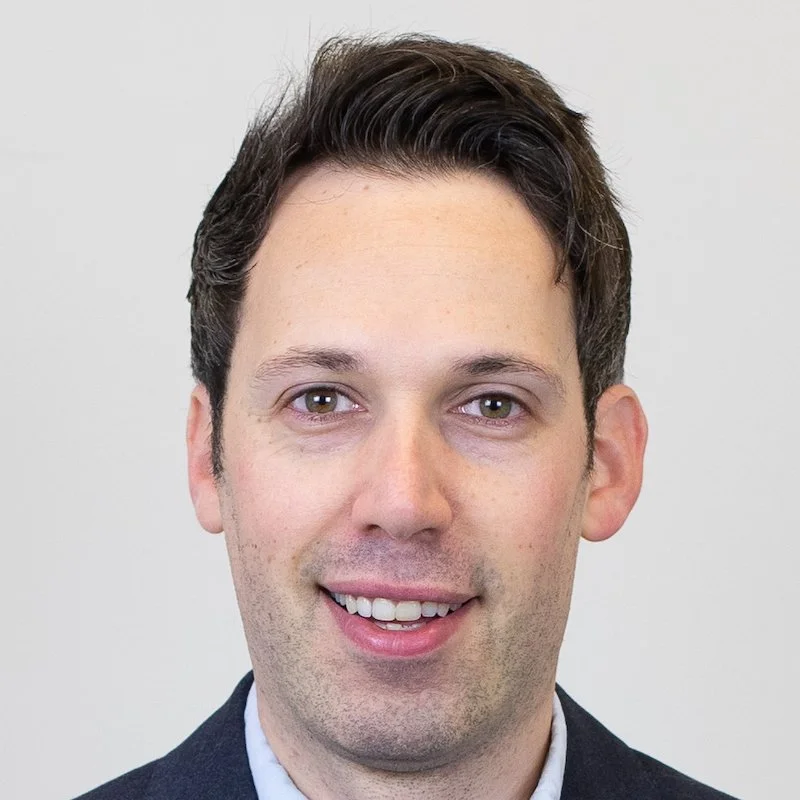
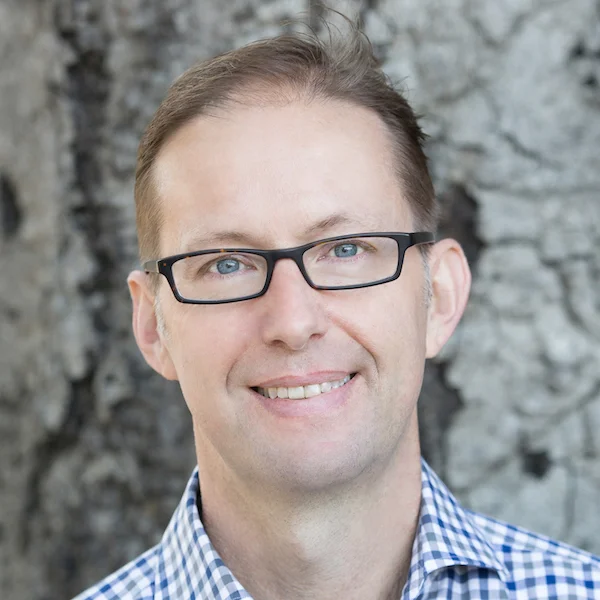
This is episode is an interview Sander van der Linden author of Foolproof: Why Misinformation Infects Our Minds and How to Build Immunity.
Read MoreA Podcast that Explores how neuroscience is unraveling the mystery of how our brain makes us human
Brain Science is a monthly podcast Brain Science, hosted by Ginger Campbell, MD. We explore how recent discoveries in neuroscience are helping unravel the mystery of how our brain makes us human. The content is accessible to people of all backgrounds.
This is episode is an interview Sander van der Linden author of Foolproof: Why Misinformation Infects Our Minds and How to Build Immunity.
Read MoreBrain Science 182 features an interview with Iris Berent, author of The Blind Storyteller: How We Reason About Human Nature. We explore how our inborn biases toward dualism and essentialism influence our response to both science and mental illness.
Read MoreBS 175 is an interview with Carol Tavris, co-author of Mistakes Were Made (but Not by Me) Why We Justify Foolish Beliefs, Bad Decisions, and Hurtful Acts by Carol Tavris and Elliot Aronson. We originally talked back in 2011, but in this interview we talk about why Dr. Tavris felt that it was essential to publish a 3rd edition that includes recent political events in the United States.
Read MoreBrain Science 173 features host Dr. Ginger Campbell reading an excerpt from her bestseller Are You Sure? The Unconscious Origins of Certainty. She explains why this topic is extremely relevant during these times of of extreme uncertainty.
Read MoreBS 168 is an interview with psychologist Cecilia Heyes from Oxford University in the UK. We talk about her fascinating book "Cognitive Gadgets: The Cultural Evolution of Thinking." Our focus is on exploring the evidence that several cognitive skills that appear to be unique to humans are learned from other people rather than being inherited genetically as is often assumed. The proposal that language is a cognitive gadget NOT a cognitive instinct is controversial and has very important implications.
Read MoreBrain Science 159 features Kevin Mitchell, author of Innate: How the Wiring of Our Brains Shapes Who We Are.
Read MoreBS 156 is an interview with Stanford psychologist Russell Poldrack, author of The New Mind Readers: What Neuroimaging Can and Cannot Reveal about Our Thoughts.
Read MoreBSP 117 is an interview with pioneering neuroscientist Dr. Michael Gazzaniga about his new autobiography Tales from Both Sides of the Brain: A Life in Neuroscience.
Read More
Click to play BSP 113
The Dalai Lama's first visit to Alabama included several large public gatherings but I was invited to attend "Neuroplasticity and Healing," which was the scientific symposium he hosted at the University of Alabama at Birmingham (UAB). The featured neuroscientists were Dr. Edward Taub and Dr. Michael Merzenich. The moderator was Dr. Norman Doidge.
The Dalai Lama has a long-standing interest in science and he told the rapt audience that his four areas of interest are cosmology, physics, neurobiology, and psychology.
He is very interested in neuroplasticity and his visit to Alabama was actually prompted by a desire to see the work of Dr. Edward Taub who has pioneered a revolutionary approach to stroke rehabilitation. During this event Dr. Taub and Dr. Merzenich both shared how their work in brain plasticity is being used to help people with a variety of neurological challenges, but Dr. Merzenich also emphasized that these same principles can be applied by everyone. He explained that brain plasticity "is a two way process," which means that the choices we make are important. The Dalai Lama noted that Eastern practices like Meditation "work from the inside out," which is why he feels that Buddhist psychology and modern neuroscience can inform each other.
Episode 113 of the Brain Science Podcast includes audio excerpts from "Neuroplasticity and Healing" as well as my summary of the key ideas. Extras for the Mobile app include a free download of BSP 26 with Dr. Norman Doidge.
Premium Subscribers now have unlimited access to all old episodes and transcripts.
New episodes of the Brain Science Podcast are always FREE. The most recent 6 years of content is free. See the individual show notes for links the audio files.


"Neuroplasticity and Healing" on YouTube
Soft-Wired: How the New Science of Brain Plasticity Can Change Your Life by Dr. Michael Merzenich PhD
The Brain That Changes Itself: Stories of Personal Triumph from the Frontiers of Brain Science by Norman Doidge (Audible link)
Train Your Mind, Change Your Brain: How a New Science Reveals Our Extraordinary Potential to Transform Ourselves by Sharon Begley
BSP 10: Introduction to Brain Plasticity (Discussion of Train Your Mind, Change Your Brain)
BSP 26: Norman Doidge, MD, author of The Brain That Changes Itself
BSP 28: Edward Taub, PhD: applies brain plasticity to Stroke Rehab
BSP 54: Michael Merzenich, pioneer of Neuroplasticity
BSP 105: Michael Merzenich talks about Soft-Wired: How the New Science of Brain Plasticity Can Change Your Life
Next month's episode will be our 8th Annual Review Episode.
The most recent 25 episodes of the Brain Science Podcast are always FREE. Older episodes and episode transcripts are available for $1 each. Premium subscribers have unlimited access to all 100+ episodes and transcripts.
Reminder: The Brain Science Podcast mobile app is now FREE for iOS, Android and Windows Mobile. Check newer episodes for extra free content!
Don't forget to check out my other podcast Books and Ideas.
Please share your feedback about this episode by sending email to brainsciencepodcast@gmail.com or going to the Brain Science Podcast Discussion Forum at http://brainscienceforum.com. You can also post to our fan pages on Facebook or Google+.
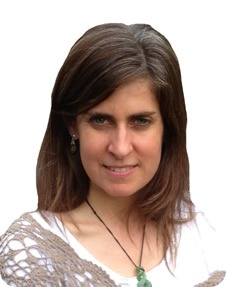
Penny Lewis
In The Secret World of Sleep: The Surprising Science of the Mind at Rest Dr. Penelope A. Lewis provides a highly readable account of the fascinating world of sleep research. Fascinating research is being carried out with animals as varied as fruit flies and rats, as well as with humans. I was surprised to learn that most people actually find it fairly easy to fall asleep in an fMRI scanner.
I have just posted an interview with Dr. Lewis (BSP 107) that includes a discussion of the role of sleep in memory as well as interesting findings about how synapses in the brain actually change during sleep. We still don't know exactly what sleep (and dreaming) are essential, but research in this field is growing. Dr. Lewis is excited about emerging research that suggests improving slow wave sleep may significantly improve learning and memory.
Buy Audio MP3 for $2.
Premium Subscribers now have unlimited access to all old episodes and transcripts.
New episodes of the Brain Science Podcast are always FREE. All episodes posted after January 1, 2013, are free. See the individual show notes for links the audio files.

The Secret World of Sleep: The Surprising Science of the Mind at Rest by Penelope A. Lewis
Dreamland: Adventures in the Strange Science of Sleep by David K. Randall (audible link)
Dreaming: A Very Short Introduction by J. Allan Hobson
Xie L, Kang H, Xu Q, et.al. 2013. Sleep Drives Metabolite Clearance from the Adult Brain. Science 342: 373-377. DOI: 10.1126/science.1241224 http://www.ncbi.nlm.nih.gov/pubmed/?term=Sleep+Drives+Metabolite+Clearance+from+the+Adult+Brain
G. Tononi and C. Cirelli, “Sleep and Synaptic Homeostatis: A Hypothesis,” Brain Res. Bull. 62 (2003): 143-150. http://www.ncbi.nlm.nih.gov/pubmed/14638388
Bushey D, Tononi G, Cirelli C. Sleep and synaptic homeostasis: structural evidence in Drosophila. Science, 332(6037):1576-1581, 2011. [DOI: 10.1126/science.1202839]. http://www.ncbi.nlm.nih.gov/pmc/articles/PMC2715914/
See episode transcript for additional links and references.
Dr. Campbell has been invited to speak at The Amazing Meeting 2014, which will be held in Las Vegas July 10-13. This year's theme is Skepticism and The Brain. Stay tuned to learn more.
It will soon be possible to gain CE credit for selected episodes of the Brain Science Podcast.
Listener John Richards has relaunched is excellent Neuroscience Glossary at http://richardsonthebrain.com. This is a great place to learn more about terms and ideas that you hear on the Brain Science Podcast.
Please post your comments about this episode in our Goodreads Group at http://brainscienceforum.com or send email to brainsciencepodcast@gmail.com.
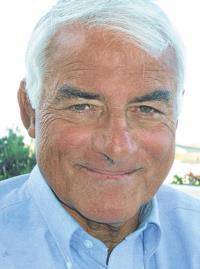
Allen Frances, MD
Americans are spending billions of dollars on psychiatric medications, but according to Dr. Allen Frances (Saving Normal: An Insider's Revolt Against Out-of-Control Psychiatric Diagnosis, DSM-5, Big Pharma, and the Medicalization of Ordinary Life) "We are ignoring the people who have severe psychiatric illness; so that, one-third of people with severe depression see a mental health clinician, two-thirds don't. Two-thirds of people with severe depression get no treatment at all. At the same time, we're way over-diagnosing people who have milder problems that would get better on their own."
Meanwhile, the drug companies push the prescribing of expensive new medications, while at least a million Americans are receiving their mental health care via the prison system. Allen argues "It shouldn't be that we deliver our psychiatric services to patients after we make them prisoners. We should be getting the kind of community care and housing that's common in the rest of the world. We're barbaric; we've gone back two hundred years, imprisoning psychiatric patients."
In BSP 102 Dr. Frances and I talk about the various factors that are driving these disturbing trends, including the over prescribing of psychotropic medications to young people without regard to the long term consequences. These are issues that concern us all, so I encourage you to listen to this interview and check out the additional references I have included below.
Premium Subscribers now have unlimited access to all old episodes and transcripts.
New episodes of the Brain Science Podcast are always FREE. The 50 most recent episodes are also free. Just subscribe in your favorite podcasting app.


Choosing Wisely: a resource for reducing the overuse of tests and other medical procedures
Saving Normal: An Insider's Revolt Against Out-of-Control Psychiatric Diagnosis, DSM-5, Big Pharma, and the Medicalization of Ordinary Life by Allen Frances
Essentials of Psychiatric Diagnosis, Revised Edition: Responding to the Challenge of DSM-5® by Allen Frances MD
Hippocrates Cried: The Decline of American Psychiatry by Michael A Taylor
The Book of Woe: The DSM and the Unmaking of Psychiatry by Gary Greenberg (Audible.com link)
The Brain Science Podcast relies on Listener Donations and iTunes Reviews.
Please vote for the Brain Science Podcast as the Best Science Podcast for the People's Choice Podcast Awards. Voting will be starting soon.
Dr. Campbell will be attending the 2013 Meeting of the National Association of Science Writers at the University of Florida, November 1-5.
Next month's episode is an update on the Human Connectome Project with Olaf Sporns. Dr. Sporns was previously featured in BSP 74.

The Brain Science Podcast recently passed 4 million downloads and it remains entrenched at or near the top of the iTunes rankings for Science and Medicine. So now it's time for our 6th Annual Review Episode. The purpose of this year-ending podcast is to review some of the year's highlights and key ideas. As I reviewed the transcripts of this year's episodes, I was struck by the fact that although each episode stands alone, they also inform one another. One unifying theme was the importance of taking an evolutionary approach to understanding how the human brain generates complex features like mind and consciousness.
FREE: audio mp3 (click to stream, right click to download)
Premium Subscribers now have unlimited access to all old episodes and transcripts.
New episodes of the Brain Science Podcast are always FREE. All episodes posted after January 1, 2013, are free. See the individual show notes for links the audio files.
Interviews have become an outstanding feature of the Brain Science Podcast. This year I interviewed 10 scientist, including five who have appeared in past podcasts.
Patricia Churchland, PhD (Professor Emeritus, University of California-San Diego)#*
William Uttal, PhD (Professor Emeritus, University of Michigan)*
Christof Koch, PhD (Chief Science Officer, Allen Institute for Brain Research)#*
Sebastian Seung, PhD (Masschusetts Institute of Technology)*
Rachel Herz, PhD (Brown University)#*
Pamela Greenwood, PhD (George Mason University)*
Terrence Deacon, PhD (University of California-Berkeley)*
Bruce Hood, PhD (University of Bristol, UK)#*
Evan Thompson, PhD (University of Toronto, Canada)*
Jaak Panksepp, PhD (Washington State University)#*
#Indicates returning guest. See Guest List for previous episode.
*See the Bibliography page for books featured on the Brain Science Podcast.
In addition to discussing the books by these guests, I also reviewed Who's in Charge?: Free Will and the Science of the Brain, by Michael S. Gazzaniga, and Self Comes to Mind: Constructing the Conscious Brain, by Antonio Damasio.
BSP 32: Brief Introduction to brain anatomy.
BSP 47: Basics of brain evolution.
BSP 57: Chris Frith, author of Making up the Mind: How the Brain Creates Our Mental World.
BSP 67: Thomas Metzinger, author of The Ego Tunnel: The Science of the Mind and the Myth of the Self.
I am closing down the website SCIENCEPODCASTERS.ORG, which I founded back in2008. If you are looking for more high quality science podcasts I suggest the NSF-funded Science 360 Radio.
Donations via PayPal, check, or wire transfers: click here to learn how.
Buy the BSP app for your iOS or Android mobile device: a great way to get ALL the episodes and transcripts.
Buy my eBook: Are You Sure? The Unconscious Origins of Certainty from Amazon or get the PDF version HERE.
Buy T-shirts and other Brain gear here.
Share the show with everyone you know!
Join the brain Fan Page on Facebook, Google+, and share your thoughts in our Discussion Forum on Goodreads. Of course you can also send me email at brainsciencepodcast@gmail.com.
To get show notes automatically and never miss an episode of the Brain Science Podcast sign up for the BSP newsletter.

Dr. Jaak Panksepp
In his new book, The Archaeology of Mind: Neuroevolutionary Origins of Human Emotions, Jaak Panksepp set out to make his life's work more accessible to a general audience. To be honest, reading this book requires a significant commitment, but I think he does a wonderful job of updating his classic textbook, Affective Neuroscience. Anyone who is interested in this field will definitely want this book as a reference.
The other strength of Archeology of Mind is its evolutionary approach. The primary emotional processes that Panksepp has spent his career studying have their origins in the ancient parts of the brain that are shared by all mammals. This contradicts longstanding assumptions in neuroscience, but it has important implications for both humans and other animals.
In Episode 91 of the Brain Science Podcast, Dr. Panksepp and I talked about some of the new information contained in Archaeology of Mind, with a particular focus on FEAR, which, contrary to what many researchers claim, does NOT begin in the amygdala, but begins much lower. We do talk briefly about the experimental evidence, but this was covered in more detail during Dr. Panksepp's previous appearance on the Brain Science Podcast in BSP 65.
Premium Subscribers now have unlimited access to all old episodes and transcripts.
New episodes of the Brain Science Podcast are always FREE. All episodes posted after January 1, 2013 are FREE. Please see individual show notes for links to audio files and transcripts.
The Archaeology of Mind: Neuroevolutionary Origins of Human Emotions, by Jaak Panksepp and Lucy Biven.
Affective Neuroscience: The Foundations of Human and Animal Emotions, by Jaak Panksepp.
Please see the episode transcript for additional links and references.
BSP 32: An introduction to brain anatomy.
BSP 47: A review of brain evolution.
BSP 65: Previous interview with Jaak Panksepp (click here for Premium version).
BSP 89: Interview with Evan Thompson, author of Mind in Life: Biology, Phenomenology, and the Sciences of Mind.
BSP 90: Review of Self Comes to Mind: Constructing the Conscious Brain, by Antonio Damasio.
The earliest episodes of the Brain Science Podcast are now disappearing from iTunes but they remain freely available here. They are also available within the Brain Science Podcast app for mobile devices. By the way, the mobile app has been updated, and I need users to post new reviews.
Don't forget to get your copy of my eBook, Are You Sure? The Unconscious Origins of Certainty, from Amazon.com. You can also buy the PDF version HERE.
The Brain Science Podcast is supported by listener Donations. It also relies on your word of mouth, so don't forget to share it with others.
Next month's Brain Science Podcast will be our annual review episode. Meanwhile don't forget to check out my other podcast, Books and Ideas. The most recent episode is an interview with Emily Reese from Minnesota Classical Radio.
Join the Brain Science Podcast Fan Page on Facebook, Google+, and share your thoughts in our Discussion Forum on Goodreads. Of course, you can also send me email at gincampbell at mac dot com.
To get show notes automatically and never miss an episode of the Brain Science Podcast sign up for the BSP Newsletter.

Bruce Hood, PhD
The Self Illusion: How the Social Brain Creates Identity, by Bruce Hood, is a fascinating look at how our brains create both our experience of the world and our sense of being a single, coherent self. As the word "illusion" in the title indicates, neither is exactly what it seems. When I interviewed Dr. Hood (BSP 88), he explained that The Self Illusion is a broad introduction to this somewhat surprising idea. TheSelf Illusion was written with a general audience in mind. For those already familiar with the topic, he also puts a new emphasis on the role of development. All readers should come away with a new appreciation for the critical role social interactions play through out human life.
Premium Subscribers now have unlimited access to all old episodes and transcripts.
New episodes of the Brain Science Podcast are always FREE. All episodes posted after January 1, 2013, are free. See the individual show notes for links the audio files.
Books and Ideas #34: Bruce Hood talks about his first book, SuperSense. (mp3)
BSP 29: Dr. Maryanne Wolf, author of Proust and the Squid: The Story and Science of the Reading Brain. (mp3)
BSP 57: Dr. Chris Frith, author of Making up the Mind: How the Brain Creates Our Mental World. (mp3)
BSP 67: Thomas Metzinger, PhD, author of The Ego Tunnel: The Science of the Mind and the Myth of the Self. (mp3)
Books and Ideas #43: Dr. Carol Tavris explains the basics of cognitive dissonance. (mp3)
BSP 72: The Neuroscience of Magic. (Listen Now)
BSP 75: Dr. David Eagleman, author of Incognito: The Secret Lives of the Brain. (mp3)
Books and Ideas #48: Jonathan Gottschall, author of The Storytelling Animal: How Stories Make Us Human. (mp3)
SuperSense: Why We Believe in the Unbelievable, by Bruce M. Hood. (Audible link)
The Self Illusion: How the Social Brain Creates Identity, by Bruce Hood (Audible link)
Willpower: Rediscovering the Greatest Human Strength, by Roy F. Baumeister & John Tierney (Audible link)
Please see the FREE episode transcript for many additional references, including references to the scientific studies discussed in this podcast.
I will be in Philadelphia, PA October 16-21 to attend the AAFP annual meeting. Listeners who live in the area and physicians who are attended this meeting are invited to drop me an email if interested in getting together in person.
The latest episode of Books and Ideas is an interview with Jonathan Gottschall, author of The Storytelling Animal: How Stories Make Us Human. This episode continues some of the same themes explored in BSP 88.
Upcoming episodes: Discussion of Self Comes to Mind, by Antonio Damasio, and interviews with Evan Thompson (Mind in Life) and Jaak Panksepp (The Archaeology of Mind).
Sign up for the Brain Science Podcast Newsletter: You will get the show notes automatically and never miss a new episode.
Don't forget to post your review of my eBook, Are Your Sure? The Unconscious Originis of Certainty, on Amazon.com, Goodreads.com or your favorite website. (Send me your Amazon receipt to get a free PDF.)
Connect with other BSP fans: BSP Facebook Fan Page, Google +, Discussion Forum on Goodreads.com.
Follow me on Twitter: @docartemis.
Send me feedback at brainsciencepodcast@gmail.com

Disgust is an universal emotion, but unlike emotions like fear and anger, disgust must be learned. This is the main conclusion of Dr. Rachel Herz's latest book, That's Disgusting: Unraveling the Mysteries of Repulsion. In a recent interview (BSP 86), Dr. Herz told me why she spent the last several years studying this rather unusual subject. We also discussed what the study of disgust can tell us about how our brains process emotion.
This is Dr. Herz's second visit to the Brain Science Podcast. Back in BSP 34 we talked about her first book, The Scent of Desire: Discovering Our Enigmatic Sense of Smell.
Premium Subscribers now have unlimited access to all old episodes and transcripts.
New episodes of the Brain Science Podcast are always FREE. All episodes posted after January 1, 2013, are free. See the individual show notes for links the audio files.

The episode transcript contains additional links and references.
My new eBook, Are You Sure? The Unconscious Origins of Certainty, is now available at Amazon.com. If you want the PDF version, just send me a copy of your Amazon receipt and I will send you the PDF for no additional cost.
Please post reviews of Are You Sure? on Amazon, Goodreads, or on your blog.
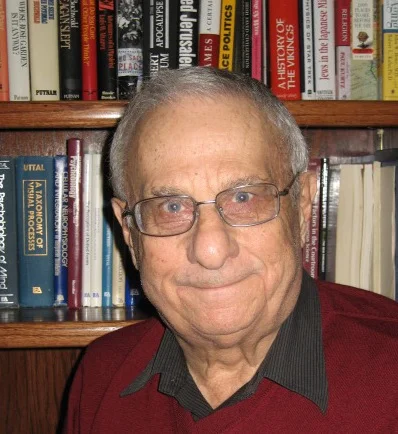
William Uttal, PhD
There is nothing more exciting than the mind/brain problem" according to Dr. William Uttal, author of Mind and Brain: A Critical Appraisal of Cognitive Neuroscience. In the latest episode of the Brain Science Podcast (BSP 83) I talked with Dr. Uttal about why he feels that brain imaging can not solve this mystery.
First, there is the problem that brain imaging represents the wrong level of analysis because every spot you see on a brain scan actaully represents thousands of neurons. This means that the activity and interaction between individual neurons has been lost. Then there is the problem of reproducibility, with divergent results between studies.
The evidence is accumulating that "much of the brain responds to any stimulus, and every area of the brain participates in multiple functions." This means that asking where a given function occurs may be the wrong question.
BSP 83 represents an on-going discussion of these issues, so I have included links to related episodes in the show notes.
Related Podcasts:
Send me feedback at gincampbell at mac dot.com.

I am putting Episode 43 of Books and Ideas into the Brain Science Podcast feed because it should be of interest to BSP fans. This episode is an interview with psychologist Carol Tavris.
We talk about the relationship between psychology and neuroscience as well as cognitive dissonance, which is the subject of Dr. Tavris's recent book Mistakes Were Made (But Not by Me): Why We Justify Foolish Beliefs, Bad Decisions, and Hurtful Acts.
Post your comments in the thread on the BSP Discussion Forum in Goodreads or send me feedback at gincampbell at mac dot com.
The latest episode of the Brain Science Podcast (BSP 71) is our 4th annual review episode. As usual, I review highlights from this year's interviews, but this year I added a new feature: my personal reflections on how the Brain Science Podcast has impacted my life. This episode also contains a special announcement for UK listeners.
Premium Subscribers have unlimited access to ALL old episodes and transcripts, as well as extra content for selected episodes. All content is available browser or the free Brain Science mobile app.
Patreon supporters have access to new transcripts ($3+/month) and ad-free audio files ($10+/month). You can also access your bonus content via the free Patreon mobile app.
New episodes of Brain Science are ALWAYS FREE and remain FREE for approximately 6 years. See the individual show notes for more information
Emotions with Jaak Panksepp (BSP 65).
Memory with Randy Gallistel (BSP 66).
Consciousness with Thomas Metzinger (BSP 67).
Alzheimer's Disease with Peter Whitehouse (BSP 68 and Books and Ideas 36).
Glia Cells with R. Douglas Fields (BSP 69).
Pop Psychology Myths with Scott Lilienfeld (BSP 70).
Affective Neuroscience: The Foundations of Human and Animal Emotions, by Jaak Panksepp (BSP 65).
Memory and the Computational Brain: Why Cognitive Science will Transform Neuroscience, by C. R. Gallistel, Adam Philip King (BSP 66).
The Ego Tunnel: The Science of the Mind and the Myth of the Self,by Thomas Metzinger (BSP 67)
The Myth of Alzheimer's: What You Aren't Being Told About Today's Most Dreaded Diagnosis, by Peter J. Whitehouse and Daniel George (BSP 68 and Books and Ideas 36).
The Other Brain: From Dementia to Schizophrenia, How New Discoveries about the Brain Are Revolutionizing Medicine and Science, by R. Douglas Fields (BSP 69).
50 Great Myths of Popular Psychology: Shattering Widespread Misconceptions about Human Behavior, by Scott O. Lilienfeld, Steven Jay Lynn, John Ruscio, Barry L. Beyerstein (BSP 70).
For additional references: follow links to episode show notes.
The Brain Science Podcast app is now available for both iPhone and ANDROID (NEW!)
Be sure to subscribe to my Books and Ideas podcast. The next episode will come out in December.
The next episode of the Brain Science Podcast will come out in January 2010.
Send me feedback at brainsciencepodcast@gmail.com.
BSP 70 is an interview with Dr. Scott Lilienfeld, co-author of 50 Great Myths of Popular Psychology: Shattering Widespread Misconceptions about Human Behavior. This episode was recorded live at Dragon*Con 2010 in Atlanta, Georgia. We focused our conversation on the fact that scientific reasoning and critical thinking do NOT come naturally; instead, we all tend to make similar errors, such as mistaking correlation for causation. Dr. Lilienfeld shared his experiences, and an extensive question and answer session with the live audience allowed him to explore additional examples.
Premium Subscribers have unlimited access to ALL old episodes and transcripts, as well as extra content for selected episodes. All content is available browser or the free Brain Science mobile app.
Patreon supporters have access to new transcripts ($3+/month) and ad-free audio files ($10+/month). You can also access your bonus content via the free Patreon mobile app.
New episodes of Brain Science are ALWAYS FREE and remain FREE for approximately 6 years. See the individual show notes for more information
Listen in your Favorite Audio app: Audible, Amazon music, Pandora, Spotify, YouTube and many more.

Twitter: @docartemis
Facebook page: http://www.facebook.com/brainsciencepodcast
Email: brainsciencepodcast@gmail.com
Episode 34 of Books and Ideas is an interview with Bruce M Hood, author of SuperSense: Why We Believe in the Unbelievable .
Dr. Hood is a developmental psychologist with a long-standing interest in why people believe weird things. In SuperSense, he argues that innate cognitive structures (how we think without being taught) give people a natural tendency toward belief in the supernatural. Our intuitive sense of how the world works is often at odds with the findings of modern science.
In this interview we discuss the evidence for these conclusions and their implications.
New episodes of the Brain Science Podcast are always FREE. All episodes posted after January 1, 2013, are free. See the individual show notes for links the audio files.
Click here for detailed show notes and to learn more about more free episodes of Books and Ideas.
Any amount is appreciated.
Pledge $4/month or more with Patreon and get all new episode transcripts.
Supporters who pledge $10+ per month also get ad-free versions of each new episode.
Copyright 2013 - 2023 | Virginia Campbell, MD. All Rights Reserved.